
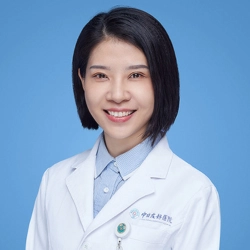
Jie Zhang
China Japan Friendship Hospital, ChinaPresentation Title:
Combining contrast-enhanced ultrasound with methylene blue for detection of sentinel lymph nodes in early breast cancer
Abstract
Aims/Background: Sentinel lymph nodes (SLNs) are an important prognostic factor for breast cancer patients, but traditional axillary lymph node dissection methods have many complications, while sentinel lymph node biopsy has been developed as a better method. This study aimed to evaluate the efficiency of combining contrast-enhanced ultrasound (CEUS) with methylene blue for identifying SLNs in early-stage breast cancer patients.
Methods: This retrospective study included clinical data from 163 female patients with lymph node-negative and T1-2 early breast cancer admitted to China-Japan Friendship Hospital between August 2022 and November 2023. All patients received a periareolar injection of SonoVue followed by ultrasonography to identify SLNs. The methylene blue was used to detect SLNs during the surgery, and the patients underwent sentinel lymph node biopsy. We compared the methylene blue method with combined CEUS and methylene blue to identify the number of SLNs per patient. Furthermore, these two methods were compared to determine the number of SLNs and the number of SLNs positive in 34 SLNs positive patients.
Results: This study included 163 patients with tumor (T)1-2 node (N)0-3 metastasis (M)0. The identification rate of SLNs was 100% for CEUS. We detected 376 SLNs using a combined CEUS and methylene blue method, with a median of 2 (1, 5). Furthermore, methylene blue identified 627 SLNs, with a median of 3 (1, 12). However, CEUS detected a significantly lower number of SLNs than those identified by methylene blue (p < 0.001). Additionally, metastasis frequency was substantially higher for the combined CEUS and methylene blue method (66.3%, 53/80) compared to methylene blue approach alone (39.5%, 58/147) (p < 0.001).
Conclusion: Combining CEUS with methylene blue is expected to improve the accuracy of axillary staging in breast cancer patients while reducing surgical trauma and postoperative complications.
Biography
Jie Zhang, MD, PhD, is an attending physician in the Department of Breast & Thyroid Surgery at China Japan Friendship Hospital, Beijing, China. she graduated from Peking Union Medical College and has received training and research experience at Sahlgrenska Cancer Center, University of Gothenburg, Duke University, and UCSF as a visiting scholar. Zhang’s clinical interests are in breast and thyroid surgery, with a focus on breast cancer and thyroid cancer. His areas of expertise include breast cancer risk reduction, breast-conserving surgery, mastectomy, sentinel lymph node biopsy, ductal carcinoma in situ (DCIS), thyroid lobectomy, and related procedures. she has published numerous articles in international journals, including Annals of Surgical Oncology and Cancer Letters, and has contributed as a translator to two editions of the book “Operative Techniques in Breast, Endocrine, and Oncologic Surgery.” Dr. Zhang has also participated in several research projects and is an active member of multiple Chinese medical associations.

Organization Location
1309 Coffeen Avenue, STE 1200, Sheridan, Wyoming 82801, USA
Mail us at
General Enquiry
contact@scientexconferences.com
Call us at
: (+1) 332 322 7161